Mr Christie's Idea: The Making of Glyndebourne
The man who built Glyndebourne liked to receive his guests in lederhosen. John Christie was a Sussex landowner of ample means and firmer opinions, and by the spring of 1934 he had arrived at the view that what the English countryside chiefly wanted was Mozart
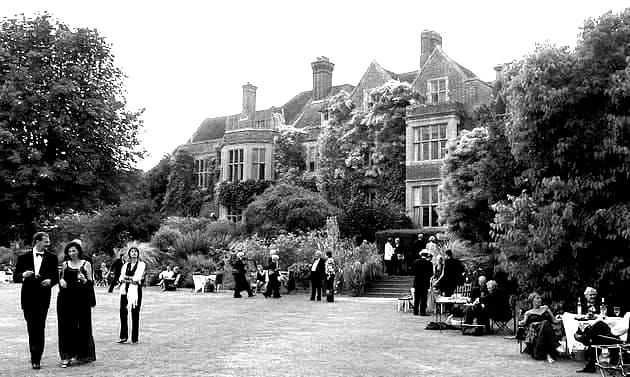
The man who built Glyndebourne liked to receive his guests in lederhosen. John Christie was a Sussex landowner of ample means and firmer opinions, and by the spring of 1934 he had arrived at the view that the history of English music was about to change, beginning in his own garden. What the countryside chiefly wanted, he had decided, was Mozart, performed to a standard, in a theatre attached to his own house. That the idea worked at all is the surprising part. That it became a fixture of the season, spoken of alongside Ascot and Henley, is stranger still.
A Country House and Its Owner
Christie had inherited Glyndebourne, a rambling house near Lewes, and set about improving it with the energy of a man who has never been told no. He had taught science at Eton before the war, which perhaps explains a temperament fond of large systems pursued to their conclusion. He installed a substantial organ in the house and gave musical evenings, the sort of gatherings at which the host's enthusiasm slightly outruns the room's. By his fifties he had money, a house with good acoustics, and a growing conviction that the two ought to be put to serious use.
What he lacked was any particular reason to be modest about it. Glyndebourne was not built to fill a gap in the market or to answer a demand. It was built because Christie wanted it, and could, and saw no argument against.
The Soprano Who Said Do It Properly
The correcting influence arrived in 1931, when Christie married Audrey Mildmay, a professional soprano some years his junior who had sung with the touring companies and knew the business of the stage from the inside. Christie's first instinct had been grand and Germanic. He admired Bayreuth, had Wagnerian ambitions, and entertained the notion of a Wagner festival in the Sussex Downs, an idea that says a great deal about the confidence of the man and rather less about the acreage.
Mildmay, who actually knew what singing to a standard required, is credited with the correction. If he was determined to spend the money, she is said to have told him, he had better do the thing properly, and doing it properly meant Mozart, sung by the best available voices, in a house built for the purpose rather than a converted barn. It is one of the better instances in English cultural history of a wife saving a husband from himself. The theatre that went up seated around 300, small enough that the singing never had to be forced.
Figaro in a Field: Glyndebourne's History Begins
The house opened on 28 May 1934 with The Marriage of Figaro, and the choice of the company is what separated the enterprise from a rich man's folly. Christie did not engage amateurs and local talent. He secured Fritz Busch to conduct and Carl Ebert to produce, with Rudolf Bing managing the whole, three men of the first rank who had reasons to be out of Germany and Austria in the mid-1930s, and who brought with them the standards of houses far larger than the one they now found in a Sussex garden.
The result was that a private theatre in the countryside opened at a level most metropolitan houses would have envied. Bing went on to run the Edinburgh Festival and then the Metropolitan Opera in New York, which gives some sense of the calibre Christie had gathered around his idea. The point of that first season was never the novelty of opera in a field. It was that the opera was serious, and that it happened to be in a field.
The Long Interval
Much of what the season now treats as Glyndebourne custom began as practical accommodation. Performances start in the late afternoon, which leaves a dinner interval of roughly an hour and a half, long enough to eat properly rather than snatch a sandwich. Into that gap flowed the whole apparatus for which the place is now half-remembered: the hampers, the folding tables, the picnics spread across the lawns and along the lake, the black tie that is strongly implied and never quite compelled.
Christie encouraged the formality without ever quite legislating it, and the effect was to make an evening at Glyndebourne feel like a garden party that happens to contain an opera. He was known to greet audiences himself, an eccentric host welcoming guests to a house that was, after all, still his. The paradox is a pleasing one. A theatre built with real seriousness about the music is remembered by a good many people for the interval.
The Idea Outlasts the Man
Audrey Mildmay died in 1953, and Christie in 1962, by which time the festival was established well beyond the reach of any single lifetime. The original theatre was replaced in 1994 by a considerably larger house, and the lederhosen have long since gone the way of most founding eccentricities. The idea, however, proved more durable than the man who had it.
It is the mark of a certain kind of English institution that it comes to seem as though it had always been there, that no one could remember a summer without it. Glyndebourne manages the impression rather well, considering it began as one landowner's refusal to be talked out of something.
Comments ()