Cowes Week
Cowes Week has been sailed on the Solent since 1826, and in exactly two centuries of racing it has been cancelled only three times, for each of the two World Wars and once, in 2020, for a pandemic.
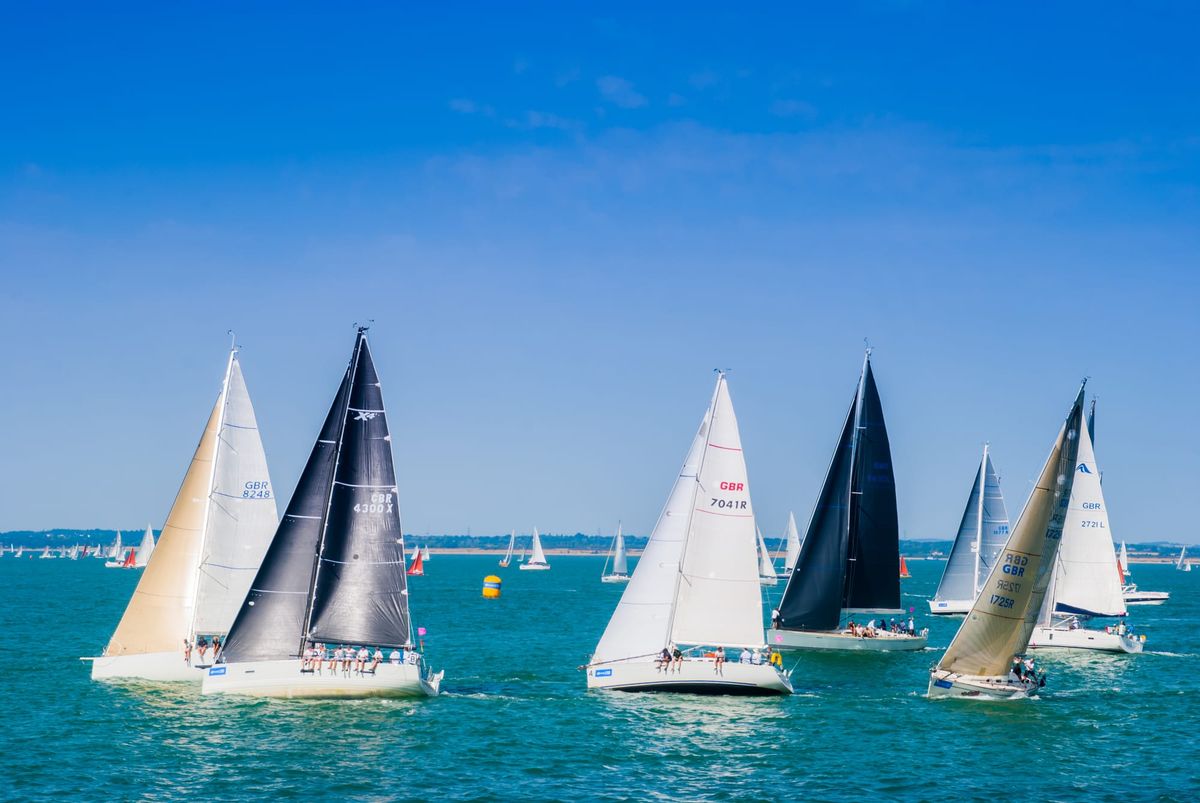
Cowes Week has been sailed on the Solent since 1826, and in exactly two centuries of racing it has been cancelled only three times, for each of the two World Wars and once, in 2020, for a pandemic. It has not once been cancelled for insufficient wind, which says something about where the organisers' priorities have always sat.
The first race was for a Gold Cup worth £100, entered by seven yachts and staged by the Royal Yacht Squadron, an organisation that has occupied Cowes Castle since 1815 and shows no inclination to leave. King George IV added a cup of his own the following year, which is the sort of royal endorsement that tends to settle a fixture's calendar position for good, and Cowes Week has kept the same fortnight ever since, barring the odd disagreement with the tides or, in 2012, a scheduling clash with the Olympics that nobody much enjoyed working around.
A Slow Start on Modernising
For well over a century the week remained the Squadron's own affair, run entirely from the Castle, which meant that for a long time it was also, in practice, run entirely for men. The ladies, when the RYS's own history gets around to mentioning them, were first entertained on a lawn optimistically named the Deer Park, and did not get so much as a roof of their own until after the First War, when the Squadron secured a ballroom from Rosa Lewis, the celebrated proprietress of the Cavendish Hotel. Progress, at Cowes, has generally arrived by increments of this kind, and been received with roughly equivalent enthusiasm.
It was after that same war that the Six Metre class took off, encouraged by the British American Cup, and offshore racing began its slow climb toward respectability. The first Fastnet Race was sailed in 1925, won by a yacht called Jolie Brise, a name with rather more character than most of what competes today, and by 1957 the inaugural Admiral's Cup had cemented ocean racing as a fixture of the week rather than a curiosity attached to it. In odd-numbered years the fleet still sets off for the Fastnet Rock once the inshore racing is done. Even years get a different offshore course, so that nobody has to wait two years for the pleasure of being thoroughly unwell somewhere out past the Needles.
None of this happened because the Squadron was in any great hurry to modernise. In 1964, at Prince Philip's suggestion, the RYS finally agreed to share the running of Cowes Week with six other clubs, an arrangement generally described now as a modernising step. It had taken a hundred and thirty-eight years and a direct royal request to arrive at the conclusion that organising a regatta of this size might go rather better with help, which feels, in retrospect, a reasonable amount of time to spend thinking it over.
What the Week Looks Like Now
The results of that patience are visible enough today. What began as seven yachts racing for a single afternoon has become up to a thousand boats and forty starts a day, watched from the shore by tens of thousands of people, a good many of whom could not tell a spinnaker from a picnic blanket and see no reason why that should stop them enjoying the week. The racing itself still starts beneath the Castle, where the cannons still fire and the race officers still call the starts from the battlements, a system that has never needed updating because nobody has yet improved on a cannon for getting a fleet's attention. Spectators gather along the Green to watch the finishes, an arrangement that has held for so long it barely registers as a choice any longer.
The one recent break in this record involves, of all things, the fireworks. The Friday display that closed the week for the better part of a century was quietly dropped in 2019, for reasons of funding rather than sentiment, and did not return until this year, brought back specifically to mark the Squadron's bicentenary. Two hundred years of near-total continuity, in other words, and it was the fireworks, the one part of the week with no bearing whatsoever on the racing, that needed a special occasion to be reinstated. Make of that what you will.
The Town's Part in It
The town, for its part, does the rest of the work required. Cowes is small enough that arriving unnoticed takes real effort, and the anchorages sit close enough together that the boats form their own kind of seating plan, visible to everyone whether they intended to be seen or not. Nobody has ever accused Cowes Week of subtlety on this particular point, and two hundred years in, nobody shows any sign of starting.
Comments ()