Kentucky Derby Dress: The Sack Suit Option
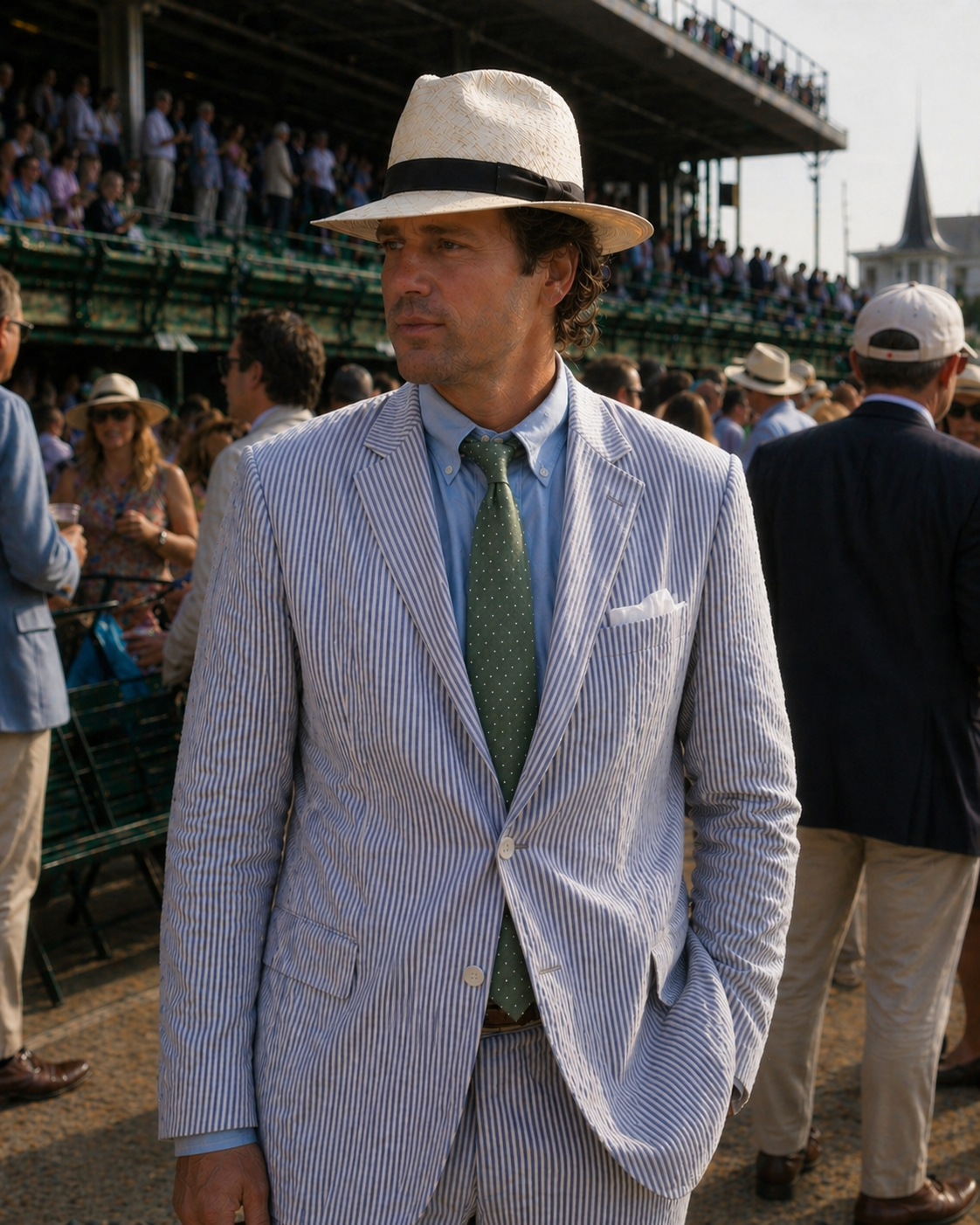
The first Saturday in May at Churchill Downs has, in recent decades, become the occasion for a particular kind of American costume. Pastel seersucker in colours unknown to nature, fedoras with hatbands picking up a fourth and unrelated hue, trousers in mint or coral, ties printed with tiny mint juleps. It is enthusiastic, in the way of fancy dress everywhere, and the people wearing it are having a marvellous time.
It is also a comparatively recent invention.
Where the tradition comes from
The Derby's sartorial heritage, properly understood, is Ivy. Not Ivy in the loose contemporary sense, which has come to mean any cotton suit worn by a man with a tan, but the actual American natural-shoulder tradition that Brooks Brothers issued from its Madison Avenue shop in 1901 and J. Press refined in New Haven across the next half-century. The No. 1 Sack Suit, three buttons rolling to two, soft-shouldered, hanging straight from the chest with a centre vent and a flat-front trouser, was the Eastern undergraduate's uniform by the 1930s. It was what one wore to the races at Saratoga, at Pimlico, and at Churchill Downs. The look was relaxed, durable, and quietly correct.
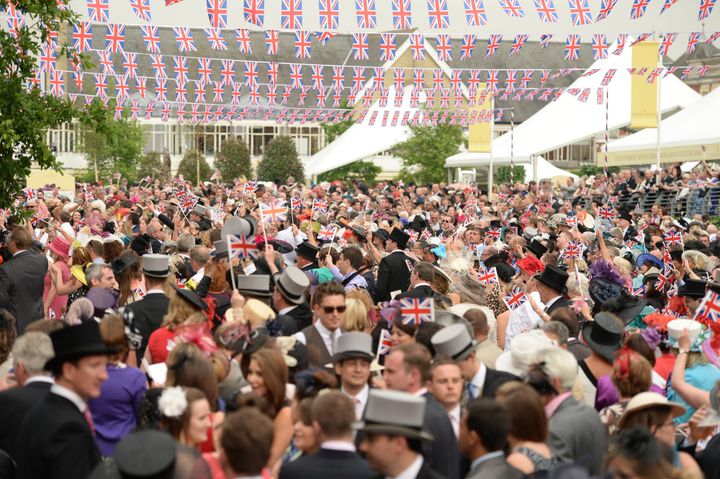
What is interesting from a London vantage is that this American canon was always partly British. Brooks Brothers based its house style on London tailoring; the button-down collar arrived in 1900 from the English polo field, the polo coat shortly afterwards. The sack suit's softer shoulder was a deliberate American easing of the structured Savile Row coat, but its grammar (the lapel roll, the notched lapel, the half-canvas chest) descended unmistakably from the Row. The Derby man in his cream sack and the Ascot man in his morning coat are second cousins, not strangers.
This matters because it locates the failure mode. The mistake at the Derby is not that one has dressed too casually, nor that one has dressed too formally for an American context. The mistake is novelty: the sense that the day requires a costume rather than a suit. A pastel pink seersucker is not a seersucker. A fedora is not a Derby hat. The mint julep tie is, charitably, a joke that has been told too many times.
The suit
In light worsted, fresco, linen, or proper seersucker. By proper seersucker one means the navy-and-white or grey-and-white striped cotton in a real sack cut, with the slight pucker that gives the cloth its name. Navy and white is the workhorse and the most assured. Light grey and white is permissible but reads quiet, and if grey is the choice the day asks for some warmth in the accessories: a tie with life in it, a Panama with a coloured band, a pocket square that does its job. A cream linen suit is correct and slightly more demanding of upkeep. A tropical wool in stone or pale grey is correct and slightly more forgiving.
Hats, shoes, and the rest
Hats are where most Derby outfits fail and where they most easily succeed. A genuine Panama, ideally a Montecristi, is the answer. A boater, in fine weather, is the answer's more spirited cousin. The fedora belongs at the late-autumn meet; the porkpie belongs to a different American tradition altogether. A coloured grosgrain band, in club stripes or a quiet floral, is the place to spend a small amount of personality.
Shoes are brown, and polished. White bucks, properly chalked, are correct and rare. Loafers in burnished cordovan are correct and easy. Avoid anything black, anything two-toned in a way that announces itself, anything that has been polished into a mirror.
A madras tie, worn without irony, has its place. So does a knitted silk in a quiet colour. The pocket square is linen, white or in a stripe that picks up the tie at one remove. The shirt is a pale blue or white oxford, button-down or spread, never French-cuffed for daylight.
For women
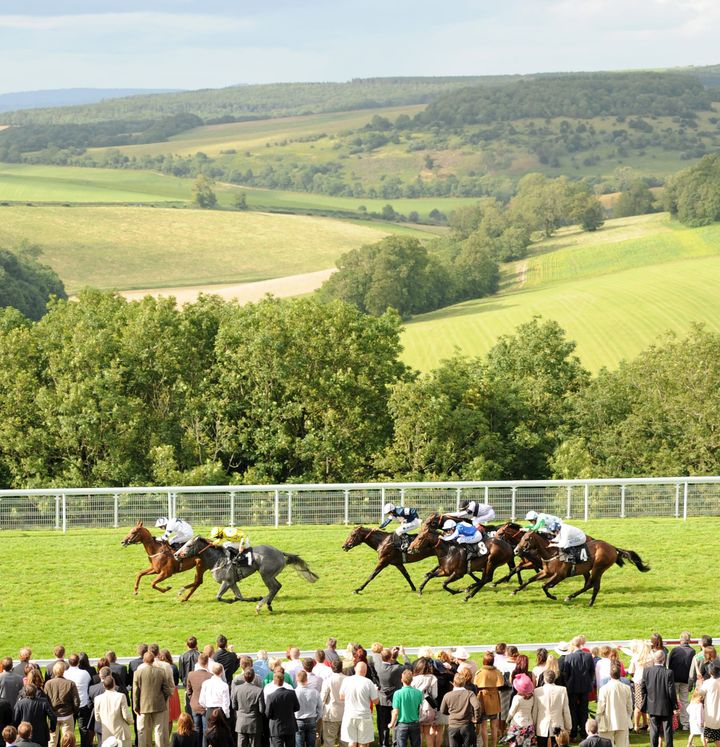
The brief is similar in spirit. A dress that would pass at Goodwood, a hat that is a hat rather than a fascinator, shoes that will see one through the afternoon without theatre. Print is welcome; novelty print is not. The wide-brimmed straw with a grosgrain band, of the sort one might wear to a regatta in late June, travels to Louisville without alteration.
The older view holds up. The Derby earned its reputation in seersucker and Panama and madras worn without irony, and the day is the better for being approached in that spirit. Treat the heritage as the heritage of an event one cares about, rather than as an occasion to wear something one cannot wear anywhere else, and the rest follows.
Comments ()